
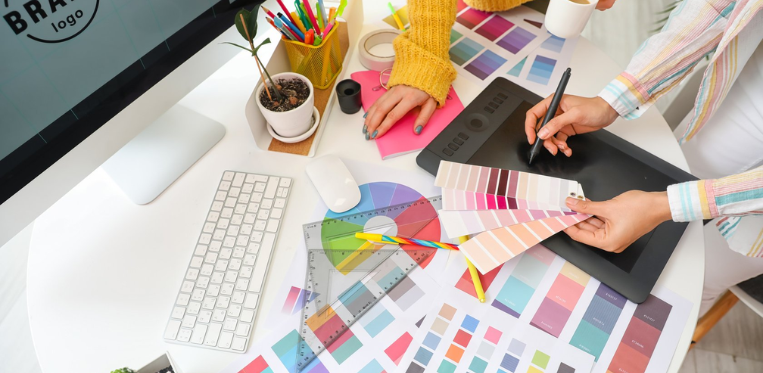
Graphic design is the craft of creating visual content to convey messages. Designers use typography, imagery, color, and layout techniques to captivate viewers and communicate concepts. From print media to digital platforms, design shapes the way people interact with brands and ideas.
🔑 Why Graphic Design Matters
Brand Identity: A strong visual identity helps businesses stand out. Logos, color palettes, and typography define how a brand is perceived.
Enhanced Communication: Visual elements make complex information more digestible, whether through infographics, icons, or custom illustrations.
Increased Engagement: People are naturally drawn to visuals — well-designed content grabs attention and encourages interaction.
Professionalism & Trust: High-quality design builds credibility and leaves a lasting impression, showing that a brand values attention to detail.
✨ Key Elements of Great Design
Typography: The art of arranging type to make written language legible and appealing.
Color Theory: Choosing harmonious colors to evoke emotions and set the tone.
Composition: Structuring elements in a balanced, visually pleasing way.
Imagery & Icons: Using graphics, photos, and symbols to enhance storytelling.
📊 Popular Design Tools & Software
Adobe Creative Suite: Industry-standard tools like Photoshop, Illustrator, and InDesign.
Canva: A user-friendly platform for quick and beautiful designs.
Figma: Perfect for UI/UX design and team collaboration.
🚀 The Role of a Graphic Designer
Graphic designers are more than just creators; they’re problem-solvers. They translate abstract concepts into compelling visuals that connect with target audiences. Whether working on branding, marketing campaigns, or web design, designers balance creativity with strategy to achieve meaningful results.